

The downstream industry is facing a dual challenge - trying to deliver energy security alongside delivering the energy transition, all the while coping with rising costs as a result of the energy crisis. The colossal implications for the European energy sector were at the centre of the discussion during our recent ESF Europe advisory meeting joined by companies including BP, Braskem, TotalEnergies, Equinor, Essar Oil UK, Phillips 66, and MOL.
Investment is needed to tackle the challenge but it’s unclear where this will come from. Technology advancements are required to address the energy transition however, the current priority is security of supply. The trilemma of energy needing to be secure, affordable, and low carbon needs to be managed in unison, despite the volatility in prices, policy and supply. There is a threat that the industry is losing sight of the bigger decarbonisation picture whilst it works to resolve the short-term challenges. The current focus for many is on preparing for the challenges that this winter will bring, which will have an impact on future operations. The industry has a very complex problem ahead with no single or easy solution.
The trilemma of energy needing to be secure, affordable, and low carbon needs to be managed in unison, despite the volatility in prices, policy and supply
Although there are several technologies that could be deployed for alternatives, the regulatory framework does not align, proving to be a concern. Projects in the industry are extremely capital intensive with long payback times, coupled with the volatility, investment decisions are becoming increasingly difficult. Without regulatory support it's impossible for the industry to evolve at the speed needed. While energy security is a concern in the short term for the entire value chain, the investments that will become the solutions or bridges in the longer term, must start now.
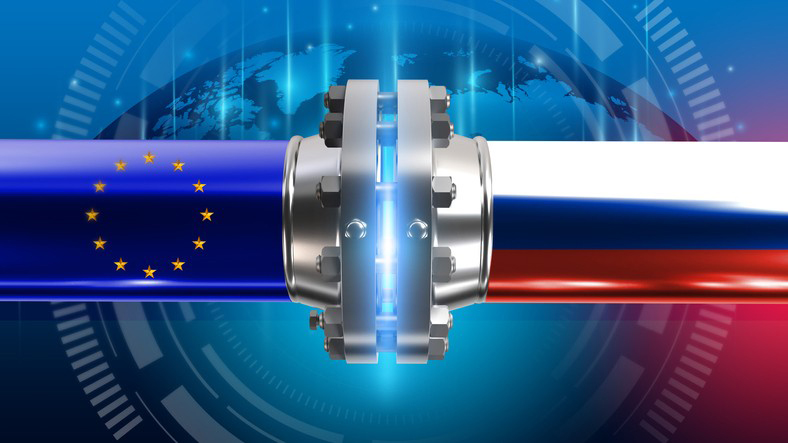
Despite the threat the Russia and Ukraine crisis has brought to Europe’s energy industry, it isn’t here to stay. When the conflict ends, will energy security continue to be a meaningful policy driver or will the industry revert to relying on cheap gas?
It was commented that it is unlikely that Europe would go back to such heavy dependence on Russian gas given the consequences that we’re witnessing today and the way that energy has been weaponised. However, the high prices are driving inflation, which is driving central bank fiscal policy, making economies weaker and resulting in bailout packages, which are ultimately having a drag on long-term economic growth and development.
The recently launched Inflation Reduction Act (IRA) in the United States has highlighted an acceleration of the transition there, as Europe shifts away from use of Russian gas. Combined with announcements of China going a similar way, today we are seeing investments that would previously have been unheard-of, all-in support of the energy transition. Looking locally to Europe, the RED II programme indicates a similar direction, albeit without the billions of incentives behind it that the US has. The expectation is that industry will see more initiatives like this happening with some advisors commenting that this may not have happened without the war. Although the war is accelerating the aspirations of the transition, the deliveries are being slowed. Many companies are studying projects but not progressing, largely due to the current uncertainty coupled with post COVID volatility where resource constraints within the supply chain still exist.
Furthermore, there was an echo of worry amongst our advisors that the US will see more investment than Europe due to the IRA. Coupled with the energy security crisis, there are serious concerns that Europe could lag behind, not only when it comes to global competition, but also the energy transition.
With greater ROI available in the US, more investments are expected to move there, raising the question of how Europe can stay competitive as an investment location in these conditions? Without clear regulatory definitions, the economics and timing of projects will change significantly depending on the boundary conditions.
Climate change will not go away after the war and society is already seeing some of the consequences. Government policy to enable investments is key. Huge investments are needed in renewables, nuclear, liquid fuels, storage, infrastructure, batteries, hydrogen pipelines, carbon capture, etc and European national governments struggle with a long-time view when only elected for a short period. Depending on upcoming elections in certain countries, these targets could get derailed.
Join us in Amsterdam on 20-22 February 2023 where we will be diving deeper into all of these topics and more at the only event dedicated to downstream decarbonisation and sustainability. For more info, visit: europetro.com/esfeurope